Pesto Recipe
This post may contain affiliate links.
Looking for a quick and easy pesto recipe? This no-fuss guide lets you create a delicious sauce in just a few minutes that is perfect for any meal. Ideal for both beginners and experienced cooks, this simple pesto adds a fresh touch to your dishes with minimal effort- Trust me. I made it over a dozen times to get it perfect!
Wondering what to serve this sauce with? I’ve got a few ideas for you. Try spreading it on a pizza crust in place of traditional sauce, mix it in with bruschetta, or use a spoonful on your favorite wrap!

Why You’ll Love This Basic Pesto Recipe
- Flavor Control: Homemade means you get to tweak it just how you like – more garlic, less basil, you name it!
- Freshness: Nothing beats the taste of freshly made pesto. It’s like your garden decided to throw a party in your kitchen.
- No Preservatives: Store-bought can have additives, but your DIY version is all-natural.
- Cost-Effective: Buying all the ingredients in bulk can save you some green (pun intended).
If I’m being completely honest, I didn’t realize how easy it is to make your own pesto. I’ve always settled for mediocre store bought versions, until now that is. This is the best pesto. It’s so fresh, has a hint of citrus, and is going on EVERYTHING this summer.
For those foodie friends that are new to the flavor, pesto has a bright, herbaceous flavor primarily from basil. The garlic adds a punchy, aromatic edge, while the nuts bring a subtle earthiness and texture. Parmesan cheese lends a savory depth, and the olive oil ties everything together with a smooth, rich mouthfeel. Overall, it’s a harmonious blend of fresh garden flavors and nutty, cheesy undertones.

Ingredients You’ll Need
The ingredient list is fairly minimal with just a few star ingredients and some supporting characters to help enhance the flavor. Here is what you will need to get started:
- Basil: Basil in pesto is like the star of the show – it brings the fresh, aromatic essence that defines pesto’s unique character. Its vibrant green color gives pesto its signature look, and its slightly sweet, peppery flavor forms the foundation of the sauce’s taste profile. I tested measuring by cup and by weight. Our pesto made with 36 grams of basil was rated the best in multiple taste tests.
- Pine Nuts: They add a subtle, nutty taste and creamy consistency, helping to balance the boldness of the basil and garlic. They also help thicken the texture.
- Garlic: We added less and more garlic and found that two large cloves gives you the perfect balance. That being said, you can add more or less to your personal preference.
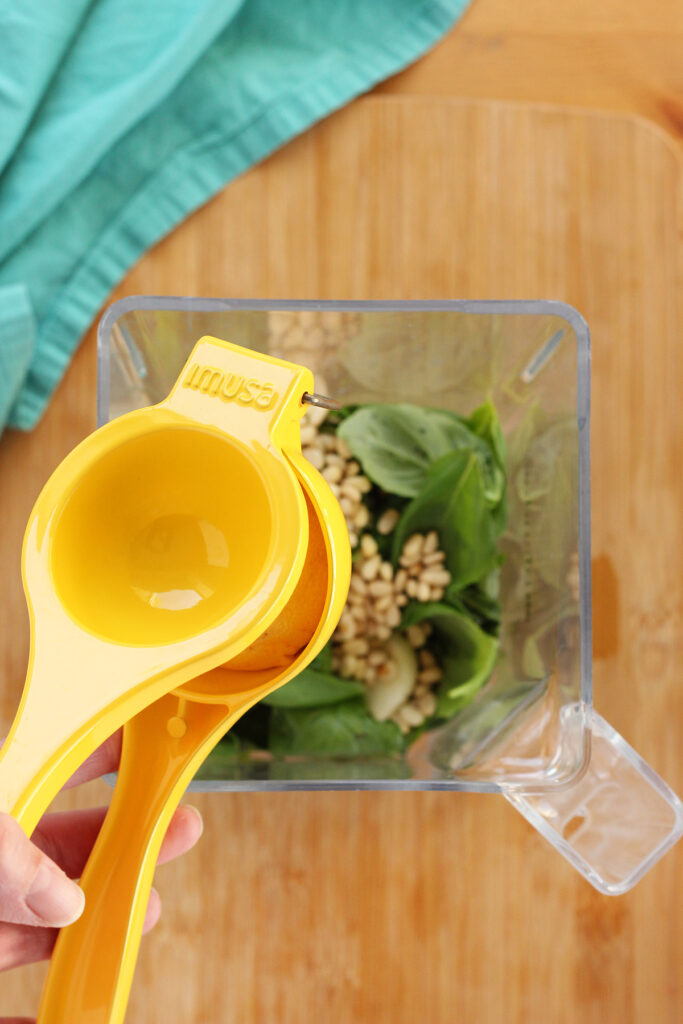
- Lemon Juice: Think of this as a splash of sunshine in your sauce. It helps keep the color vibrant while adding a hit of citrus tang that compliments the flavors beautifully.
- Salt: Just a pinch. Salt not only balances the flavors but helps to enhance them as well.
- Olive Oil: You’ll want to go with extra virgin olive oil. It’s all about that fresh, fruity flavor and quality. Extra virgin olive oil brings a richness and depth to pesto, complementing the other ingredients without overpowering them.
- Parmesan: FRESH grated parmesan is key here. Do not use the canned grated version. I also recommend grating it finely. I like this grater (affiliate) for this recipe.


Homemade Pesto Recipe
Ready to find out how to make the best pesto recipe? Turns out it’s pretty easy! Here’s how I did it with a high-powered blender, but a food processor works great too.
- Prep the Ingredients: Wash the basil leaves and pat them dry. Peel the garlic cloves.
- Blend the Greens: In your blender or food processor, combine the basil leaves, pine nuts, and garlic cloves. Pulse a few times to chop everything up.
- Add the Lemon and Oil: Pour in the lemon juice and olive oil. Blend until the mixture is mostly smooth. You might need to scrape down the sides a bit.
- Cheese Time: Add in the grated Parmesan and a pinch of salt. Blend again until everything is well combined and reaches your desired consistency.
- Taste and Adjust: Give it a taste test. If it needs more salt, lemon, or cheese, now’s the time to add and blend again.
And there you have it – a super simple, deliciously fresh pesto, perfect for pastas, sandwiches, and more!

Expert Recipe Tips:
- Toast the Pine Nuts: Gently toast the pine nuts in a dry skillet until golden. This enhances their nutty flavor and adds a great depth to the pesto.
- Cold Basil Leaves: Use cold basil leaves straight from the fridge. The cool temperature helps retain the vibrant green color when blended.
- Stream in the Oil: For a smoother texture, slowly drizzle the olive oil into the blender or food processor while it’s running. This emulsifies the oil, creating a creamier pesto.
- Adjust Consistency: If your pesto is too thick, add a bit more olive oil. For a thinner sauce, perfect for drizzling, a splash of water works well too.
- Cheese Last: Add the Parmesan cheese at the end. This prevents it from becoming overly pulverized, which can make the pesto gritty.

Helpful Tools
For this pesto recipe, a few handy tools can make your life easier and the process smoother:
- High-Powered Blender or Food Processor: (affiliate) The star of the show! They’ll efficiently blend your ingredients into a smooth, even texture. I found that my Blendtec twister jar (affiliate) gave me the best results when using a blender.
- Measuring Cups and Spoons: (affiliate) Precision matters, especially for balancing the flavors.
- Rubber Spatula: (affiliate) Great for scraping down the sides of the blender or food processor to ensure everything is well combined.
- Grater: For fresh Parmesan, a fine grater will give you the best texture.
- Mason Jar or Airtight Container: Ideal for storing any leftover pesto in the fridge or freezer.
These tools are like your trusty sidekicks, making your pesto-making adventure efficient and enjoyable!

Recipe FAQs
You can definitely substitute pine nuts with others like walnuts, almonds, or pistachios. Each brings a unique flavor and texture to the pesto. Just remember to toast them lightly for the best flavor.
In the fridge, homemade pesto can last up to a week if stored properly in an airtight container. Drizzling a thin layer of olive oil on top before sealing helps preserve its color and freshness.
Pesto freezes really well. Pour it into an ice cube tray for portioned freezing. Once frozen, transfer the cubes to a freezer bag. They can be stored for up to 3-6 months.
If your pesto is too thick, gradually add more olive oil while blending. For a lighter consistency, a bit of water or additional lemon juice works well.
Toasting pine nuts in a dry skillet over low heat until golden brown enhances their flavor and adds depth to your pesto. Keep an eye on them as they can burn quickly.



Still Hungry? Follow One Sweet Appetite on Instagram, Pinterest, and Facebook!
Want to save this recipe?
Enter your email below & we’ll send it to your inbox. Plus get great new recipes from us every week!

Best Pesto
Ingredients
- 2 cups basil
- 2 tablespoons pine nuts (toasted)
- 2 cloves garlic (peeled)
- 2 teaspoons lemon juice
- 1/2 cup olive oil
- 1/2 cup parmesan cheese
- pinch of salt
Instructions
- Wash the basil leaves and pat them dry. Peel the garlic cloves.
- In your blender or food processor, combine the basil leaves, pine nuts, and garlic cloves. Pulse a few times to chop everything up.
- Pour in the lemon juice and olive oil. Blend until the mixture is mostly smooth. You might need to scrape down the sides a bit.
- Add in the grated Parmesan and a pinch of salt. Blend again until everything is well combined and reaches your desired consistency.
- Give it a taste test. If it needs more salt, lemon, or cheese, now’s the time to add and blend again.
Notes
- Toast the Pine Nuts: Gently toast the pine nuts in a dry skillet until golden. This enhances their nutty flavor and adds a great depth to the pesto.
- Cold Basil Leaves: Use cold basil leaves straight from the fridge. The cool temperature helps retain the vibrant green color when blended.
- Stream in the Oil: For a smoother texture, slowly drizzle the olive oil into the blender or food processor while it’s running. This emulsifies the oil, creating a creamier pesto.
- Adjust Consistency: If your pesto is too thick, add a bit more olive oil. For a thinner sauce, perfect for drizzling, a splash of water works well too.
- Cheese Last: Add the Parmesan cheese at the end. This prevents it from becoming overly pulverized, which can make the pesto gritty.
The nutrition facts provided are calculated using a third-party tool and are estimates only. Actual nutritional content may vary based on the ingredients and brands you use, as well as portion sizes. For accurate results, please consult a registered dietitian or nutritionist.