
Pomegranate Jelly
This post may contain affiliate links.
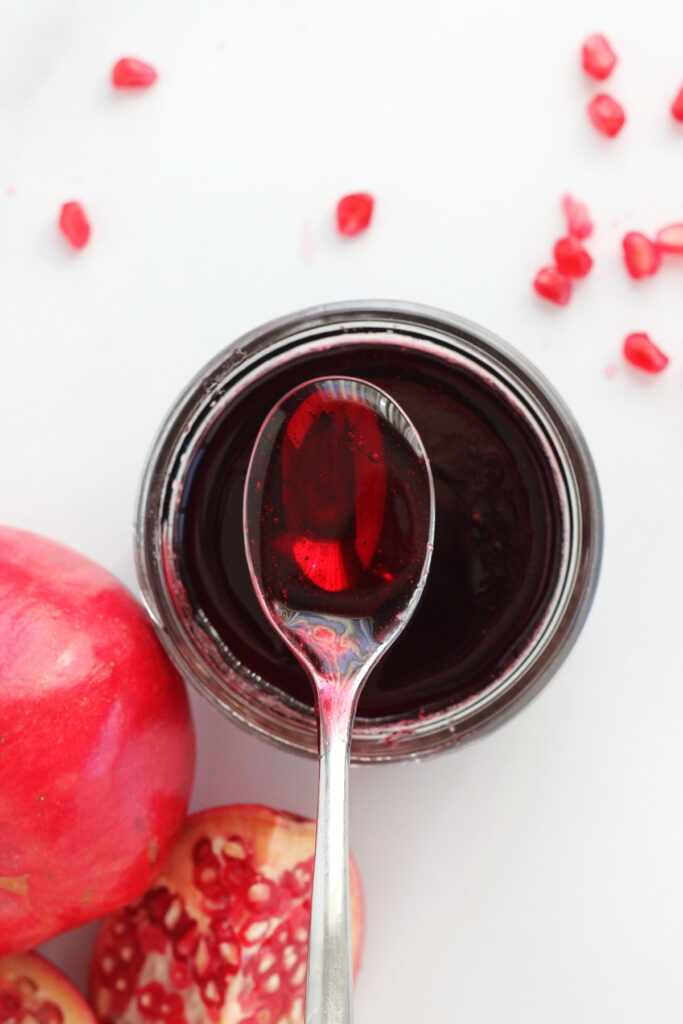
This pomegranate jelly recipe is sweet, tangy, and bursting with real fruit flavor. Made with fresh or store-bought pomegranate juice, sugar, and pectin, it’s an easy homemade jelly anyone can master. The result is a smooth, jewel-toned spread that captures the fresh taste of pomegranate so you can enjoy it all year long.
Love Jellies and Jams? Me too! Be sure to try my Apple Cinnamon Jelly, Blueberry Jelly, and Strawberry Rhubarb Jelly spread onto my easy drop biscuits!
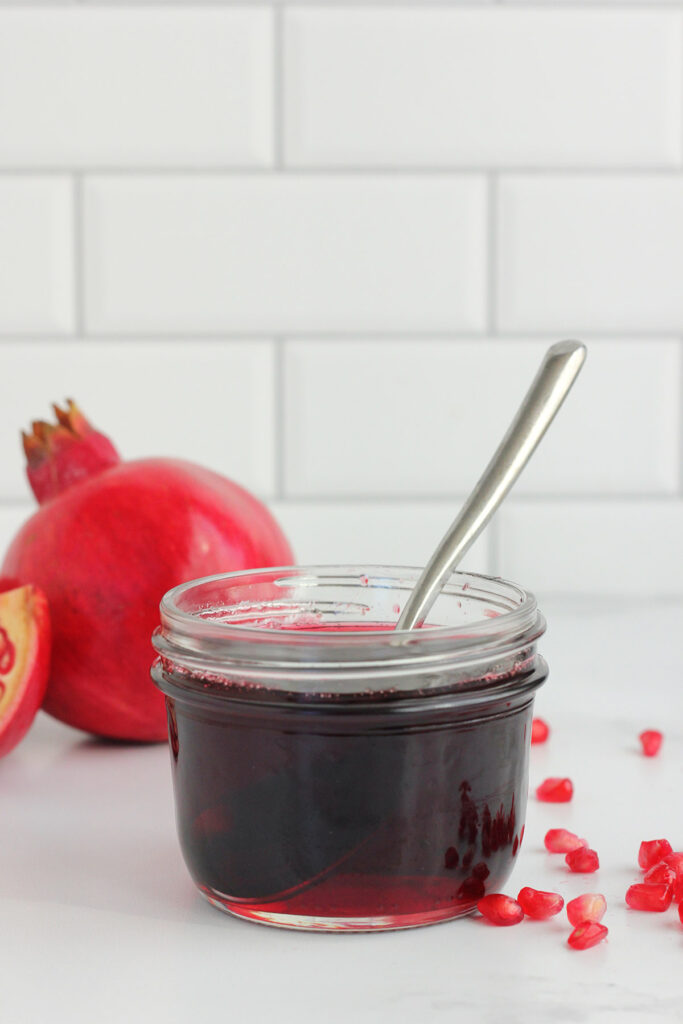
Why You’ll Love This Jelly Recipe
- Simple ingredients: You only need pomegranate juice, sugar, and pectin — no complicated steps or specialty tools required.
- Naturally vibrant flavor: The perfect balance of sweet and tart makes this homemade jelly a beautiful and delicious fruit spread.
- Great for gifting: Its stunning ruby-red color and rich flavor make it an impressive homemade gift during the holidays or as a hostess present.
- Beginner-friendly canning recipe: A perfect way to learn basic canning and preserve that fresh pomegranate taste without stress.
This recipe holds a special place in my kitchen. I grew up making this pomegranate jelly with my grandma every fall, using fruit picked straight from the pomegranate trees in her backyard.
Over the years, I’ve tested it with both fresh juice and store-bought, and the result is always sweet, tart perfection. If you love homemade preserves, you might also enjoy my apple jelly or strawberry recipes. Both use the same simple process and are perfect for learning the basics of canning at home.
Before You Start Canning
This jelly requires only 3 simple ingredients and comes together quickly. It is what I like to consider a You only need a few simple ingredients to make this homemade pomegranate jelly recipe. Each one plays an important role in helping the jelly set perfectly and develop that rich, fruity flavor.
- Pomegranate juice: Use pure pomegranate juice. Fresh juice gives the brightest flavor, but bottled juice works just as well and makes this recipe doable year-round. Look for 100% juice with no added sugar or flavoring. We like POM.
- Lemon juice: A splash of lemon juice adds natural acidity that balances the sweetness and helps the pectin set properly. Fresh lemon juice is best, but bottled works in a pinch.
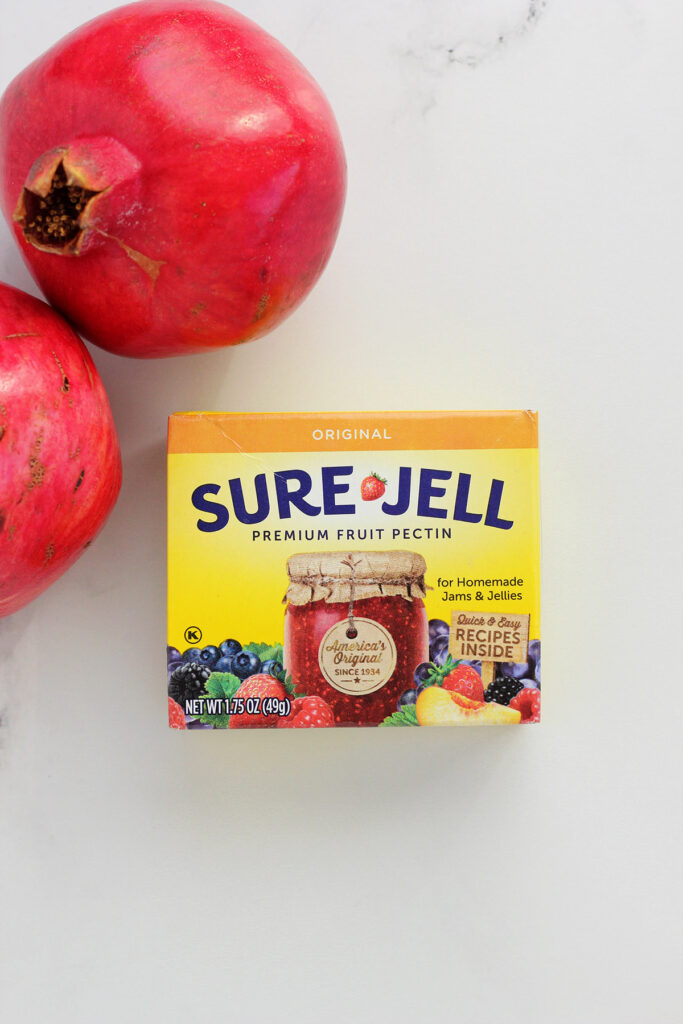
- Powdered pectin: This is what thickens the jelly and gives it that smooth, spreadable texture. One 1.75-ounce box of powdered pectin is the standard amount for this recipe.
- Sugar: Seven cups may sound like a lot, but it’s essential for both sweetness and structure. The sugar works with the pectin and lemon juice to help the jelly gel and preserve its bright color and flavor.
With just these four pomegranate jelly ingredients, you’ll get a beautifully clear, ruby-red jelly that stores well for months.

Jesseca’s Recipe Review
This jelly turned out even better than I remembered from my grandma’s kitchen. It’s sweet with just enough tartness to make it addicting. I spread it over a slice of warm toast and immediately thought, “Okay, this might be my new holiday staple.” The color alone makes it feel fancy, but the flavor seals the deal.
Tip from Jesseca:
Pomegranate juice can foam like crazy when it boils. Use a tall pot to save yourself a sticky mess. And don’t skip the freezer test before pouring into jars. It’s the easiest way to make sure your jelly sets perfectly every time.
How to Get Juice Out of a Pomegranate
If you have fresh pomegranates, you can make your own juice instead of using bottled. My grandma always boiled the seeds, which works, but over the years I’ve found a few simpler methods that bring out a bright, fresh flavor and a gorgeous ruby color.
1. Blend and strain (best flavor):
- Cut the pomegranates in half and gently tap out the seeds (arils) into a bowl discarding the white membranes. We find this tutorial the most helpful.
- Place the seeds in a blender and pulse just a few times — you don’t want to crush the bitter white parts.
- Pour the mixture through a fine mesh strainer or cheesecloth and press gently to release the juice.
2. Use a citrus press (least mess):
- Slice the pomegranate in half, like a lemon.
- Use a handheld citrus press or reamer to squeeze out the juice.
- Strain to remove any pulp or seeds.
3. Boil the seeds (traditional method):
- Place the pomegranate seeds in a pot and add just enough water to cover them.
- Simmer over medium heat for about 10 minutes, pressing the seeds gently with a spoon to release juice.
- Strain through cheesecloth. This method makes a slightly deeper, cooked flavor that tastes nostalgic if you grew up making jelly the old-fashioned way.
Homemade pomegranate juice only lasts a few days in the refrigerator, so plan to make your jelly soon after juicing for the best flavor and color.
Troubleshooting
- My jelly didn’t set:
This usually means it didn’t cook long enough or the temperature didn’t reach 220°F. You can reheat the jelly, add a bit more pectin (about 1 tablespoon), and boil again for 1–2 minutes. - The jelly is too firm:
It was probably cooked a little too long. Try warming the jar in hot water before serving to soften it. Next time, stop cooking as soon as it passes the freezer test or hits 220°F. - There’s foam on top:
A little foam is normal. Skim it off before pouring the jelly into jars for a clearer finish. - The color looks dull:
Pomegranate juice darkens if boiled too long or at too high a heat. Keep it at a steady boil, not a rapid one, for the best ruby-red color. - It didn’t seal properly:
Check the rims of your jars for chips and make sure the lids are clean before processing. Any unsealed jars should go straight into the refrigerator and be eaten within two weeks.
Helpful Tools
- Tall Pot: This will bubble up as it cooks. Keep a close eye on it as it simmers and be sure to use a tall pot (affiliate).
- Candy Thermometer: Having a thermometer on hand is so helpful in making sure the jelly gets to the right temperature.
- Pectin: This recipe does require the use of pectin to help thicken the jelly. I use a box of 1.75 oz pack of Sure-Jell (affiliate).
Your Jelly Questions Answered
Yes! Bottled juice works beautifully in this recipe. Just make sure it’s 100% pomegranate juice with no added sugar or flavoring. The flavor will still be bright and tangy, and it saves a lot of prep time.
Yes, lemon juice is important. It adds acidity that helps the pectin set and balances the sweetness of the sugar. Without it, the jelly may not firm up properly.
Most often, the mixture didn’t reach a full rolling boil or the temperature didn’t reach 220°F. You can reboil the jelly, add a little more pectin (about 1 tablespoon), and cook for another minute to help it thicken.
Not in this version. Sugar is essential for both sweetness and structure. If you want to use less sugar, you’ll need to use low-sugar pectin or a pectin specifically made for reduced-sugar recipes.
Use the freezer test. Drop a small spoonful of hot jelly onto a cold plate and let it sit for a minute. Push it gently with your finger — if it wrinkles instead of running, it’s ready.
Yes. You can pour the hot jelly into clean freezer-safe jars and refrigerate for up to 3 weeks or freeze for up to a year. This is a great option if you’re not ready to start water bath canning yet.
Not at all! It usually means the juice wasn’t strained as finely, or the jelly was boiled a bit too long. It will still taste delicious — just a little more rustic.
Properly sealed jars last up to one year in a cool, dark place. Once opened, store in the refrigerator and enjoy within 2–3 weeks.
Storage and Make-Ahead Instructions
This is a great make-ahead recipe because it keeps its flavor and texture for months when stored properly. Here’s how to get the best results whether you’re canning, freezing, or refrigerating your jelly.
- Make Ahead: You can prepare the juice and even mix it with lemon juice and pectin a few hours before cooking. Just cover and refrigerate until you’re ready to boil. Once made, the jelly needs 12–24 hours to fully set, so it’s perfect for making a day in advance.
- Canning Storage: If you’ve sealed your jars in a water bath canner, store them in a cool, dark place such as a pantry or cupboard. Properly sealed jars will keep for up to 1 year. Always check the lids before opening. They should be tight with no flex in the center.
- Refrigerator Storage: If you’re skipping the canning process, store the cooled jelly in clean, airtight jars in the refrigerator. It will last up to 3 weeks.
- Freezer Storage:For longer storage, pour the jelly into freezer-safe jars, leaving about ½ inch of space at the top for expansion. Once frozen, the jelly keeps for up to 1 year. Thaw in the refrigerator overnight before serving.
Taking the time to store your jelly properly means you’ll have that bright, sweet pomegranate flavor ready to enjoy long after the season ends.
Want to save this recipe?
Enter your email below & we’ll send it to your inbox. Plus get great new recipes from us every week!
Pomegranate Jelly
Ingredients
- 5 cups of pure pomegranate juice
- 1/4 cup lemon juice
- 1 (1.75 ounce) box powdered pectin
- 7 cups sugar
Instructions
- Wash the jars and lids in hot, soapy water and rinse well. Keep them warm while you make the jelly so they don’t crack when filled.
- In a large, tall pot, stir together the cups of juice, lemon juice, and box of pectin. The pot should be tall enough for the mixture to bubble up during boiling.
- Place the pot over high heat and bring the liquid mixture to a full rolling boil — one that doesn’t stop bubbling when you stir. Boil for about 30 seconds.
- Carefully stir in all of the sugar at once. Keep stirring until the sugar dissolves completely.
- Return the mixture to a full boil and cook until it reaches 220°F on a candy thermometer. If you don’t have one, use the freezer test: place a small spoonful on a chilled plate and let it sit for 1 minute. Push it gently with your finger — if it wrinkles, it’s ready.
- Skim off any foam from the surface for a clear jelly.
- Ladle the hot jelly into warm jars, leaving about ¼ inch of space at the top. Wipe the rims clean with a towel and seal with lids and screw bands.
- If canning: Process jars in a boiling water bath for 5 minutes, then remove and let cool completely on the counter or rack.
- If not canning: Let the jars cool to room temperature, then refrigerate or freeze.
- Allow the jelly to rest for 12–24 hours before opening so it can firm up properly.
Notes
- Always use a tall pot — jelly bubbles up quickly and can overflow.
- Don’t reduce the sugar; it helps the jelly set and preserves the flavor.
- If your jelly doesn’t set right away, let it sit for 24 hours — it often thickens as it cools.
- Store sealed jars in a cool, dark place for up to 1 year, or refrigerate open jars for 2–3 weeks.
Nutrition
The nutrition facts provided are calculated using a third-party tool and are estimates only. Actual nutritional content may vary based on the ingredients and brands you use, as well as portion sizes. For accurate results, please consult a registered dietitian or nutritionist.
More Jams and Jellies




I like that u r very knowledgeable about fresh and bottle juices. U keep things simple. Thanks for the tip
POM has red dye’s. I am deathly allergic.
Oh no, Zina. That sounds so scary. Thanks for sharing that info. The recipe actually uses 100% pomegranate juice, so definitely double-check the label before buying since some brands can vary. I hope you’re able to find a version that’s safe for you!
can I use regular corn starch instead of pectin.
Hi Cynthia, thanks for your question! Unfortunately, cornstarch isn’t a good substitute for pectin in jelly recipes. Pectin is what helps the jelly set properly, while cornstarch would likely result in a thickened sauce rather than a firm jelly. For the best results, I recommend sticking with pectin. Let me know if you have any other questions!
this will be my first time making jelly but I will try. I love pomegranates
I hope you love it, Sandra. It’s one of our favorites. This resource is super helpful if you are new to jelly making. Be sure to check it out!
If I am using the pink box of sure jell how much sugar do I add.
Hi Linda. This recipe uses a 1 (1.75 ounce) box of powdered pectin. I’m not sure what the pink box means. If it’s 1.75 oz of powdered pectin follow the recipe as stated.
Great recipe and easy to make.
I tried this recipe because of the lower sugar amount and it absolutely would not set up. usually the pectin is added to the juice and boiled before adding sugar. your recipe does not mention that. Secondly, this recipe required boiling for almost 10 minutes before reaching 220 degrees, and pectin breaks down with longer cook times. I even tried recooking this using the directions on the Sure*Jell sheet to no avail. Very sad for the waste of ingredients and time. I think part of the problem is the lower sugar to juice ratio.
Sorry that you had a difficult time with this recipe, Dawn. I actually JUST made this for the holidays and noticed that I did mess up some of the measurements. I’ve updated the recipe including measurements that are more accurate and will fully set up. I also adjusted the cooking process to help get that thicker set. So sorry that you had an issue. I hope this helps.
Is it possible to use sweetener instead of regular sugar?
Hi Gloria, I can’t be certain since I have never tried it myself. I did some research and noticed a few sites say that the jelly will be thinner. This is already a tad thin so I can’t say confidently if it would be a good idea or not.
Hi can i replace the pectin with other or could don’t use it??
I have never made jelly without pectin, so I would not be a great resource for substitutions on that ingredient.
This recipe was good. Mine was a little runny but still tasty. Wish it included a cooking temperature.
This is an absolutely amazing recipe. I made my pomegranate jelly this year and wanted to try a new recipe and this was the best by far. This recipe is going in my recipe box and it will be passed down no doubt. Thankyou
How long does it take to set in canning jars
If you use the PomWonderful, do you still add the sugar?
Yes. PomWonderful is 100% pure juice but you can adjust the amount of sugar if you prefer.
Liked the recipe. I cooked it a bit longer.
I made this recipe but cooked until a candy thermometer reached about 220 degrees. I did a spoon test and it came out perfect.
Mmmmmm love pomeggranate’s!!! I want some!
this looks beautiful and delicious. i love the taste of pomegranates, but hate the pain of taking them out of the shell… now do you know a trick on how to juice the seeds?
plastic gloves and a lot of cheese cloth. Not my favorite at all. I think last time we used a blender followed by the cheese cloth.
Just a thought. Make it with 100% pom juice and you won’t have to deal with all the seeds
Cut the poms in half cross- wise, juice with a citrus juicer, then run the juice through a fine mesh sieve. Easy easy and less mess.
Thanks for that tip Ellie! That’s incredibly helpful
Your pictures are so pretty!! I’d love to taste this 🙂
Hi There I made this last night and I followed your directions perfectly, but my jelly never set :(! Can you please tell me what I did wrong or what I can do to fix the problem :)? Thanks so much. I really want to make this!!!!
Hi Olivia,
Don’t throw your jelly out just yet! We can definitely trouble shoot this. Check out this post on how to recook jam or jelly that did not set correctly: https://www.thekitchn.com/5-ways-to-thicken-homemade-jam-234749
I will remake this recipe and adjust the cooking to ensure that the jelly sets every time.